

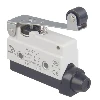
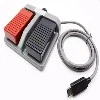
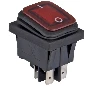
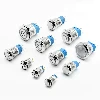
Yueqing Jixin Electronics Co., Ltd (original name: Yueqing Wanshida Switch Factory) was founded in 1990. In the 15 years our factory devotes in developing and the production of small switch and plug in componets.
Wide Product Range
The main products are KCD Rocker Switch series, KW Micro Switch series, SN Toggle Switch series, AN Push Button Switch series, etc.
Quality Assurance
Our products have passed CQC, CE, TUV, CB, UL, KC and other certifications.
Advanced Equipment
We have advanced equipment such as Automatic riveting machine, Automatic assembly machine, Automatic inspection machine, etc.
OEM & ODM Available
Besides our existing molded products, we also can produce products according to the drawings or samples from our customers. With the principle of "the most attentive services and the most reliable products' quality.
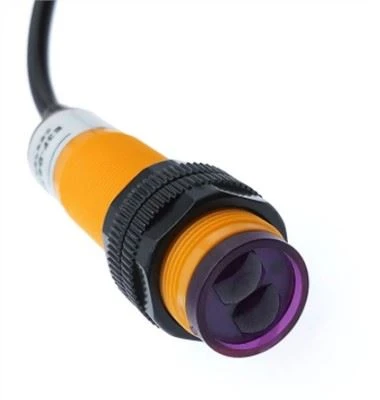
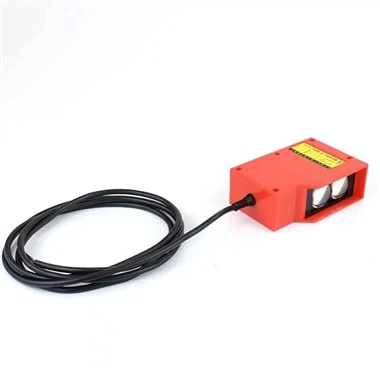
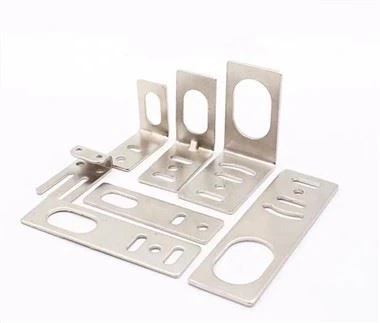
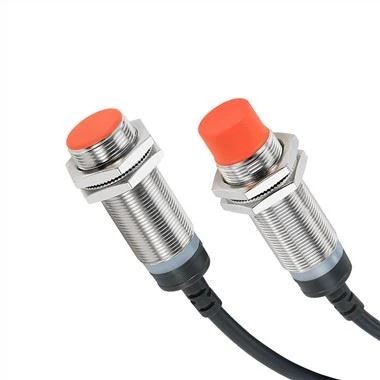
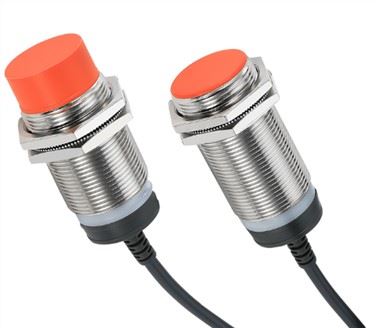
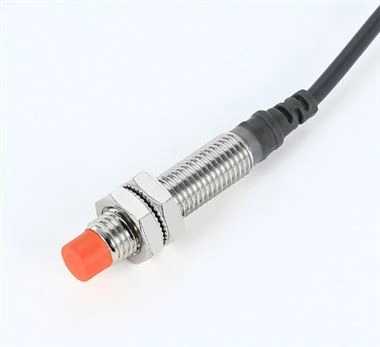
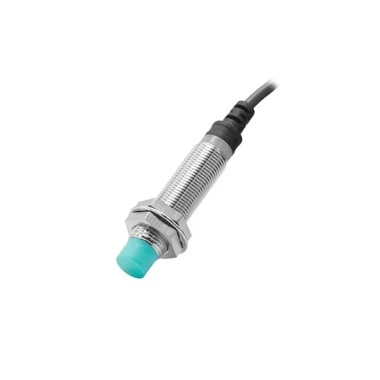
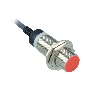
The proximity switch is a position switch that can be operated without mechanical direct contact with moving parts. When the object is close to the sensing surface of the switch to the action distance, the switch can be moved without mechanical contact and any pressure, thereby driving the DC electrical appliance. Or provide control instructions to a computer (plc) device.
What Is Sensor
A sensor is a device that detects and responds to some type of input from the physical environment. The input can be light, heat, motion, moisture, pressure or any number of other environmental phenomena. If you want to know the specifications and prices of Sensor, please contact us!
Advantages of Sensor
Improving Efficiency
Efficiency is the result created by an entity per effort. More results for the same effort increases the efficiency factor. Another way of increasing productivity is by minimizing losses (money, time, and energy). IIoT helps industries to raise their efficiency levels by optimizing existing processes. With the help of smart machines and sensors, the user now has complete knowledge of how well the machine works.
By knowing how the machine uses energy, it is possible to avoid unnecessary costs while improving core functions. Smart machines can relay the complete details on how they work, how much time they were active, and the time frames where they faced disruptions.
Improving Safety
With sensors and constant monitoring of man and machine, it is possible to reduce workplace accidents. With data flowing in and alerting the operators of a faulty machine or an overheating part, it is possible to take necessary steps to prevent the damage to the workers and the machine before that critical point.
Predictive Maintenance
Maintenance causes massive headaches to the industries as these are times when the machinery undergoes repair. It means they cannot contribute to the work cycle. With each passing minute, the company faces losses. Serious issues with the machine will leave the company scrambling to get the production rates to meet the demand.
Predictive maintenance is the process where the repairs are made on the machinery while it shows signs of failure rather than waiting for the equipment to fail. In other words, the machines get repaired even before they fail. The advantage of predictive maintenance is that the chance of the machinery going entirely out of commission is rare.
Sensors provide valuable data on the level of whereabouts of the machine on a scale that wasn't even possible with traditional machines.
Increasing Uptime
One of the advantages of machines working well around the clock is that the company can maintain longer uptime. It is a straightforward logic that when machines work for longer, the higher the productivity. Companies are trying to increase uptime in various ways, and IIoT provides them with a more intuitive way to do so through machine monitoring and predictive maintenance. The ultimate goal is to keep the factory or industry working at high-efficiency without causing critical failures to the machinery.
Types of Sensor


Temperature Sensor
One of the most common and most popular sensors is the Temperature Sensor. A Temperature Sensor, as the name suggests, senses the temperature i.e., it measures the changes in the temperature. Temperature Sensors can be analog or digital. In an Analog Temperature Sensor, the changes in the Temperature correspond to change in its physical property like resistance or voltage. Coming to the Digital Temperature Sensor, the output is a discrete digital value (usually, some numerical data after converting analog value to digital value).
Temperature Sensors are used everywhere like computers, mobile phones, automobiles, air conditioning systems, industries etc.
Accelerometer Sensor
An accelerometer is a handy sensor that measures acceleration. It detects both the direction and the magnitude of acceleration, whether it's from movement or the force of gravity. These come in different types, such as capacitive or piezoelectric, each suited for specific applications. For example, capacitive accelerometers are commonly found in smartphones to detect orientation. Accelerometers can output data in both analog and digital formats. A typical analog accelerometer will change its voltage output in response to movement. Digital models, like those in modern electronics, directly provide numerical data that applications can use. You'll find accelerometers in various devices, from mobile phones and tablets to cars, where they help with stability control and accident detection.
Infrared Sensor (IR Sensor)
IR Sensors or Infrared Sensor are light based sensor that are used in various applications like Proximity and Object Detection. IR Sensors are used as proximity sensors in almost all mobile phones. There are two types of Infrared or IR Sensors: Transmissive Type and Reflective Type. In Transmissive Type IR Sensor, the IR Transmitter (usually an IR LED) and the IR Detector (usually a Photo Diode) are positioned facing each other so that when an object passes between them, the sensor detects the object. The other type of IR Sensor is a Reflective Type IR Sensor. In this, the transmitter and the detector are positioned adjacent to each other facing the object. When an object comes in front of the sensor, the infrared light from the IR Transmitter is reflected from the object and is detected by the IR Receiver and thus the sensor detects the object.
Pressure Sensor
A pressure sensor is a tool that measures the force exerted by a fluid or gas. It can detect subtle changes in pressure and convert them into an electrical signal. There are several types of pressure sensors, including piezoelectric, strain gauge, and capacitive sensors. Each type has its specialty. For instance, piezoelectric sensors are excellent for dynamic pressure measurements like sound waves. Pressure sensors can also be analog or digital. In an analog sensor, the output is a continuous electrical signal that varies with the pressure. Digital sensors, on the other hand, convert this information into digital data that can be easily read by computers. These are essential in many areas, such as weather forecasting, automotive systems, and even healthcare, where they monitor blood pressure or respiratory conditions.
Light Sensor
Sometimes also known as Photo Sensors, Light Sensors are one of the important sensors. A simple Light Sensor available today is the Light Dependent Resistor or LDR. The property of LDR is that its resistance is inversely proportional to the intensity of the ambient light i.e., when the intensity of light increases, its resistance decreases and vise-versa.
Ultrasonic Sensor
An Ultrasonic Sensor is a non-contact type device that can be used to measure distance as well as velocity of an object. An Ultrasonic Sensor works based on the properties of the sound waves with frequency greater than that of the human audible range.
Flow and Level Sensor
Flow and level sensors are all about keeping an eye on liquids and gases. Whether it's measuring how fast something flows or checking how much is left in a tank, these are the go-to tools. You might come across different kinds, like ultrasonic sensors that measure without touching the liquid, or float sensors that sit right in it and rise or fall with the level. Whether they're analog or digital, these sensors are super helpful. Analog versions give you a smooth signal that changes with the flow or level, while digital ones break it down into numbers that are easy to read and use. From making sure your coffee machine has enough water to keeping factories running smoothly, flow and level sensors play a big part in our everyday tech.
Healthcare
Sensors have revolutionized the healthcare industry by enabling accurate and real-time patient monitoring. From wearable fitness trackers to implantable sensors, these devices capture vital signs, track activity levels, and help detect anomalies. They play a crucial role in remote patient monitoring, telehealth, and improving the overall quality of care through continuous data collection and analysis.
Automotive
In the automotive sector, sensors are widely employed to improve performance, increase safety, and enable advanced driver assistance systems. Sensors are essential for allowing vehicles to perceive their surroundings, monitor important parameters, and make decisions for a safer and more effective driving experience. This includes proximity sensors for parking assistance, tire pressure sensors for optimal maintenance, accelerometers for stability control, and LiDAR sensors for autonomous driving.
Aerospace
In the aerospace industry, sensors are integral to ensuring safe and efficient operation of the aircraft. In addition to tracking altitude, airspeed, and temperature, they also keep an eye on engine performance, look for structural stress and vibration, and supply vital information to navigation and control systems.
Agriculture
Sensors have significantly advanced the agricultural sector and transformed farming methods. Soil sensors detect levels of moisture and nutrient content, allowing for precise fertilization and irrigation that maximizes crop yield. Environmental sensors keep track of the weather, enabling farmers to manage resources, plant, and control pests with precision. Additionally, sensors help with livestock monitoring, guaranteeing the welfare of the animals and raising agricultural productivity.
Home Automation
Sensors are essential assets to home automation. With the ability to detect motion, light, temperature, humidity, and even the quality of the air, sensors are able to automate the control of security, heating, ventilation, and lighting systems within our homes. By collecting real-time data from sensors, home automation systems give homeowners more convenience and control over their living spaces by optimizing energy usage, enhancing comfort, and enhancing safety.
How to Choose Sensor
What is the maximum size allowed for the sensor? How will it be affixed to the product or asset? Sensors can differ significantly in size and shape, which is a large factor in determining which sensor to select, particularly with smaller products / assets being tracked.
Is this sensor used within a single warehouse, across a campus, or regionally/nationally/globally in the field? It's important to identify the particular geographies involved and determine if the particular sensor has connectivity in those regions (in terms of the frequency bands supported and carrier availability). If the sensor is used in a relatively small area (within a warehouse), then BLE (Bluetooth Low Energy) may be the best selection (coupled with gateways for internet connectivity). For larger areas, LoRa (Long Range), other WAN technologies or cellular may be better options. These can also be combined to provide the right mix for your use case. For example, you can "platoon" several BLE sensors with a cellular backhauled mobile sensor/gateway to enable many different assets / products to be tracked without the expense of several separate cellular sensors. As a rule of thumb, the wider the range of operation, the higher the cost for both the device and the data services (i.e., BLE is cheaper than LoRa or cellular). However, with the advent of NB-IoT and Cat-M cellular devices (and the rollout of corresponding carrier support), the cost of cellular devices is dramatically decreasing, opening up new use cases.
Another aspect to consider is the type of transportation that is needed (air, sea, land). Suppose the sensor is used on an aircraft, for example. In that case, it must meet strict regulatory and airline requirements to ensure that it doesn't interfere with other portable wireless electronic devices, airplane radio transmitters and wireless sensor networks.
Three primary considerations are 1) How long does the asset need to be tracked? 2) How often do you need this data transmitted to your visibility platform? And 3) Do you require a GPS level of location accuracy? GPS often results in significant battery drain, and other location measuring approaches, like cell tower triangulation, are much more power-efficient but lack the same accuracy. Many devices are also rechargeable; however, the time between recharging is still an important consideration, particularly for devices which are away from your sites for long periods of time.
The rapidly decreasing cost of sensors opens up far more use cases as options but focuses on ROI and cost justification. Budgets will always be a driving consideration, and there are many variables that help rationalize the expense or narrow the set of options. One variable to consider is how often you would need to upgrade/replace each sensor. Pay particular attention to sensor reusability, as reverse logistics (all operations related to the reuse of products and materials), combined with reusable sensors, make it possible for you to apply a single sensor to multiple journeys.
What kind of additional hardware and software do you need to fulfill these requirements? If you're looking into a visibility platform, is the provider device-agnostic, or are you limited to a single device vendor or device type? Does the software work with your existing sensors? How is the platform equipped to work with sensors in the future? Look for a solution designed from the ground up so that it can rapidly onboard and interoperate with both existing and future sensors. This ability is key, as it allows you to leverage previous investments while transforming your supply chain with IoT sensors.
Another key consideration, which is often overlooked, is how to administer the sensors. Ensuring you have a centralized and easy-to-use way to configure and monitor the health of your sensors is critical, especially given the expanding variety and volume of sensors that are in the marketplace today. Switch, a key can operate multiple key switches, or a key can only operate a specified key switch.
Certifications

Frequently Asked Questions
Q: What are sensors used for?
Q: What is a sensor in electronic?
Q: What are the 5 physical sensors?
Q: Why do we need sensors?
Q: How does the sensor work?
Q: What is the main function of a sensor?
Q: Where are sensors used in daily life?
Q: What is an example of a sensor?
Q: What sensor can detect human?
Q: How many sensors are in a smartphone?
Q: What are the three main sensors for humans?
Q: Do sensors need electricity?
Q: What is the difference between a sensor and a detector?
Q: How important is sensor?
Q: What is the basic working principle of sensors?
Q: What is the main sensor?
We're professional sensor manufacturers and suppliers in China, providing high quality customized products with low price. We warmly welcome you to wholesale cheap sensor in stock here from our factory. For quotation and free sample, contact us now.
Rocker Switch, 250v Spdt Microswitch With CE CCC, Short Hinge Lever Microswitch